Stemtree of Spring TX: STEM Education Center—Hands-On Learning First
The pulse of a good STEM program isn’t measured by gleaming equipment alone or the neatness of a classroom. It lives in the quiet moments when a student eyes a robotics kit, or when a child’s face brightens with the realization that a line of code can make a light blink. Stemtree of Spring TX has built a space where those moments become the everyday norm, where hands-on learning leads the way and theory follows a close second. In Spring, a town known for its thoughtful families and active schools, a center that treats STEM as a living practice can feel like a revelation. This is not a glossy brochure of promises; it’s the texture of daily practice, the sound of small victories echoing through a sunny, student-centered environment.
From the first visit to the first project, the core principle is simple and persistent: kids learn by doing. The center is designed to invite curiosity, not intimidate with jargon. When you walk through the doors, you notice a rhythm to the space—the hum of 3D printers, the soft clatter of rolling carts, the sight of whiteboards filled with color-coded diagrams, and a row of laptops where students translate ideas into executable steps. The room does not pretend to be a complete solution for every problem. It is a laboratory of possibilities, a place where children test hypotheses, fail gracefully, and try again with better questions in hand.
A long view sits at the heart of Stemtree’s approach. The mentors here are not only instructors but navigators who help young thinkers map out pathways from curiosity to capability. They recognize that a child who asks why a circuit behaves a certain way is a child who will someday design the next generation of energy solutions. The team understands the balance between structure and freedom: enough guidance to keep experiments safe and productive, enough space to let students improvise, pivot, and own their learning journey.
The physical layout reinforces this philosophy. Stations are arranged not for show but for flow. A dedicated coding corner sits adjacent to a hardware lab, each with clear adjacency to the next stage in a project. A design corner invites sketching and storyboarding, linking concept to application. The environment says, in its own quiet way, that STEM is not a series of isolated tasks but an interconnected practice. Students don’t merely complete modules; they see how coding, circuitry, mechanics, and problem-solving cohere into real solutions.
This approach matters in Spring because families often juggle busy schedules and competing priorities. After-school programs must be accessible and meaningful, not merely convenient. Stemtree’s after-school offerings are designed to slot into a family’s rhythm rather than disrupt it. A child can linger after the school day ends, drawing energy from a community of peers who are equally invested in discovery. The center’s calendar blends weekly routines with flexible topics, ensuring that a student who has a week free to dig deeper can do so without fear of losing momentum. For families, the model translates into tangible benefits: consistent skill-building, a platform for collaboration, and a soft landing into a culture of lifelong learning.
One of the most striking features of Stemtree is its emphasis on tangible outcomes that can be seen, touched, and demonstrated. There is a recurring thread of projects that require cross-disciplinary thinking. A simple robot arm may hinge on mechanical design for stability, sensor integration for feedback, and a control algorithm that determines how the arm responds to different inputs. Watching a student adjust a servo motor, observe the range of motion, and then rework the design to improve precision is a meaningful lesson in iteration. The center treats iteration as a core practice rather than a chore, and that distinction changes how students engage with the work. They learn that winning is not necessarily a single perfect solution but rather the willingness to refine, test, and learn from missteps.
The real-world texture of the programs is enriched by field-visible outcomes. Students display a portfolio of projects that travel with them, from the first beginner-level experiments to more complex explorations in robotics and programming. These portfolios do not exist in a vacuum; they grow into conversations with families, teachers, and peers. A student might bring in a small, autonomous rover built during a weekend session and explain the logic of its navigation to a curious parent who previously felt technology was an abstract concept beyond reach. Those conversations extend the impact beyond the classroom walls, giving kids the language to articulate the value of their work and the confidence to pursue further challenges.
The Spring community has many reasons to be drawn to a center that centers hands-on learning. For families, it is a practical choice: a place where children can experience the thrill of discovery while developing competencies that align with a modern, tech-forward world. For students, it is a chance to transform curiosity into capability. The difference is not simply in the content taught but in the approach to learning itself. When a student steps away from a screen with a new concept in mind and a blueprint in hand, they carry more than memory of a lesson. They carry a habit of mind: to test ideas, to ask better questions, to work through ambiguity, and to grow through practice.
The work of building confidence through hands-on practice doesn’t happen in a vacuum. It asks for careful attention to safety, inclusivity, and accessibility. Stemtree keeps safety at the forefront without letting it become a cage. Lab rules are clear, consistent, and reinforced through routines that students themselves help uphold. Instructors model careful handling of tools, respect for materials, and a methodical approach to debugging. This creates an culture where students feel safe to take calculated risks, to try an approach that might fail, and to learn from the outcome. The same clarity extends to inclusivity. The center is deliberate about making space for learners from diverse backgrounds and with different levels of prior exposure to technology. Lessons are designed to be approachable for beginners while still challenging for advanced students. It is a careful balance, but one that pays dividends in the depth and breadth of student participation.
When it comes to the specific programs, Stemtree often makes room for both depth and breadth. The robotics track invites students to wrestle with mechanical design, sensor integration, and autonomous decision making. A typical session might begin with a short demonstration of a robot's capabilities, followed by a guided troubleshooting exercise in which students identify a fault in the system, hypothesize a fix, and implement their solution. The moment of testing is where learning crystallizes: a robot behaves differently than expected, and students must reason about gears, torque, friction, and motor control in real time. It’s hands-on learning at its most honest—where success is earned through meaningful effort, not by luck or rote memorization.
Coding classes for kids at Stemtree are not a separate silo but a continuation of the same design philosophy. Students move from block-based logic to text-based coding as their confidence grows, and the projects become more ambitious. A project might involve building a game that teaches a basic math concept or a simulation that models a real-world system. Instructors emphasize not only the mechanics of syntax but the craft of problem solving: how to decompose a problem into manageable steps, how to test each step incrementally, and how to reflect on a solution that might still be imperfect. The shift from curiosity to competence is facilitated by a scaffolded environment where learners are encouraged to make decisions, own their choices, and discuss the reasons behind them.
The stem learning center experience is not a solitary journey for a student. It is a social process, shaped by collaboration, peer feedback, and shared problem solving. In the most successful sessions, you see small groups working together with a common objective. One student might take responsibility for documenting the process, another for coding, and a third for tuning the hardware. The group dynamic is not a distraction; it is an engine for deeper understanding. Children learn to articulate their thought processes with clarity, to listen to one another’s hypotheses, and to respectfully challenge assumptions. The social dimension of learning is not an add-on here; it is integral to how concepts are internalized and applied.
The stem learning center in Spring also consciously addresses the broader arc of STEM education. Short- and long-term goals are threaded through the curriculum. Short-term milestones include mastering a basic control loop in a sensor project or achieving a reliable propulsion system in a small rover. Longer-term aims focus on project-based outcomes that demonstrate engineering thinking, such as designing a device that can accomplish a practical task with a defined budget and a set of constraints. This approach mirrors real-world engineering workflows, where teams deliver functional prototypes under time and resource constraints. The continuity across projects helps students see themselves as builders and problem solvers rather than as passive recipients of content.
One practical challenge that spaces like Stemtree must navigate is the mismatch between what students want to learn and what a given session can realistically deliver. It would be tempting to chase every trending topic, from drones to virtual reality, but the most valuable sessions hinge on depth rather than breadth. The mentors manage this tension by prioritizing core competencies that unlock future learning: fundamentals of circuitry, logic, control systems, and an iterative design mindset. When a student returns with questions about a topic that wasn’t covered in a particular module, the instructors meet them where they are. They connect the inquiry to prior projects, show how the new idea relates to the existing toolkit, and offer a path forward that maintains momentum rather than introducing friction.
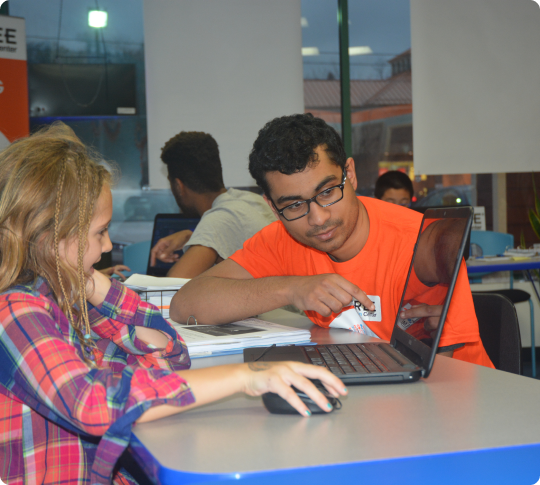
In the field of after-school STEM programs, the schedule and pacing often define what students actually accomplish. Stemtree aligns its program calendar with the rhythm of the school year while preserving space for spontaneous exploration. Some weeks are themed around a central project that pulls multiple disciplines together, while other weeks are devoted to rapid-fire challenges that test speed, accuracy, and creative thinking. The balance matters. A week focused on a single, comprehensive project gives a student time to see how decisions ripple through a system. A week of quick challenges keeps energy high and reinforces the habit of experimentation. Both formats have a legitimate place in a well-rounded program, and Stemtree uses them in a way that respects the attention spans and schedules of their learner community.
The impact of this approach is visible in the students who stay engaged, who push themselves to master the material, and who begin to articulate their own learning paths. A highlight from a seasoned mentor is the moment when a student who used to struggle with a coding concept begins to narrate their own debugging process with confidence. The mentor notes the shift from a hesitant, trial-and-error approach to a more deliberate, solution-oriented mindset. That change happens not in a single dramatic breakthrough but through a series of small, meaningful wins—each one a brick laid in the foundation of a resilient learner.
Equally important is the role that families play in sustaining this growth. Parents watching their children grow into confident problem solvers can feel the impact even if the changes are gradual. The best feedback often comes from conversations at the dinner table, where kids explain a concept they recently learned with the same enthusiasm they bring to a favorite hobby. These conversations matter because they reinforce the value of curiosity beyond the walls of the learning center. When families talk about what the child is building and why it matters, they become allies in the long journey of developing STEM fluency.
The real-world implications of participating in Stemtree’s programs extend beyond the gains in test scores or the bragging rights of a finished project. Students who engage deeply with hands-on learning develop a set of transferable skills that serve them in any field. They learn how to manage a project from concept to completion, how to collaborate effectively with others, how to communicate complex ideas in accessible terms, and how to stay curious even when a solution remains elusive. These competencies—critical thinking, collaboration, communication, and resilience—form a durable toolkit that students carry into high school, college, and the workplace.
As with any educational venture, there are limits and trade-offs. Hands-on programs require time, access to materials, and skilled mentors who can guide without overshadowing student agency. Not every student will instantly love every project, and not every concept will click on the first try. The strength of Stemtree’s model lies in how it responds to these realities. When a topic doesn’t engage a student, mentors pivot to a related project that taps into the same underlying skills. When a supply shortage or scheduling clash arises, the program adapts with a modular approach, offering alternative activities that maintain momentum without sacrificing the integrity of the learning goals. This adaptability is not a sign of weakness but a reflection of the pragmatic mindset that underpins practical STEM education.
Looking ahead, Stemtree of Spring TX appears poised to grow along with its students. The center’s strengths—clear safety protocols, a culture of curiosity, diverse project options, and a pedagogy built around doing—position it well to weather the evolving landscape of after-school programming. Families searching for a place where children can explore with purpose, while building tangible competencies, will find a compelling match here. For the community, the presence of a robust, hands-on STEM center means access to a pathway that can lead to future careers in engineering, computer science, robotics, and related fields. It is not merely a place to fill after-school hours; it is a workshop for the mind, a studio for experimentation, and a proving ground for resilience.
In every age group and at every stage of development, the core truth remains constant: meaningful learning happens when learners are actively engaged, when failure is treated as a stepping stone, and when guidance is tuned to support growth rather than dictate it. Stemtree of Spring TX embodies that truth. The center does not pretend that learning is instantaneous, or that mastery follows a straight line. Instead, it offers a structured, supportive environment where curiosity is the starting point, practice is the engine, and reflection is encouraged as a constant companion. The result is not a cohort of students who simply know more math or can code a bit better. It is a generation of thinkers who can approach new problems with confidence, who can collaborate to craft solutions, and who understand that the best path forward often emerges from the patient labor of hands-on work.
For parents considering enrichment options, the question often comes down to fit. Will a program respect my child’s pace? Will it connect with what they already enjoy or challenge them where they need growth? Stemtree’s model consistently answers with a form of yes. The environment invites experimentation without sacrificing rigor. The mentors balance high expectations with empathy, encouraging students to push their boundaries while acknowledging the occasional frustration that accompanies real learning. The students themselves, in turn, reveal a quiet courage—the willingness to take on a problem, to wrestle with it, and to present a solution that may not be perfect but is thoughtfully reasoned and clearly explained.
Two short notes from the trenches can illuminate what this looks like in practice:
-
A student who originally joined for a robotics club ends up spending a season refining a sensor fusion project that helps a small rover navigate uneven terrain. The project becomes a showcase for the concept of robust design, where attention to variability and real-world conditions takes precedence over a flawless, lab-perfect outcome. The student learns to document their process, track iterations, and articulate why certain design choices produced better results in the field.
-
Another learner who started in a coding class discovers that their favorite work lies at the intersection of software and hardware. They begin prototyping a simple wearable device that monitors environmental data, then translate insights into a user-friendly app. The project becomes a cross-disciplinary bridge, demonstrating how software development is not isolated from hardware realities but enriched by them. These shifts in interest are not unusual in Stemtree’s ecosystem; they are precisely the kind of organic growth the program seeks to cultivate.
The value of having a hands-on program in a community like Spring TX extends beyond individual outcomes. When children become confident makers, families, schools, and local businesses feel the ripple effects. Students who can demonstrate a project, explain their approach, and discuss the trade-offs in their design bring a practical dimension to STEM conversations that is both inspiring and contagious. It is easier to recruit and retain interest in science when the activity feels concrete and relevant to the child’s daily life. The center serves as a bridge between classroom learning and real-world problem solving, providing a bridge that is often missing in traditional curricula.
That bridge is also why Stemtree is worth visiting for more than curiosity alone. It represents a model of education that respects the complexities of growing up in a technology-rich era. Not everything can be learned through a screen, and not every problem can be solved by rote yesterday’s lesson. The strongest educators in the program know how to blend explicit instruction with meaningful exploration, how to scaffold toward independence without abandoning the safety net that a student sometimes requires. This balance, learned through practice and refined by experience, is what gives Stemtree its edge.
In the end, a good after-school STEM program is not merely a place to spend time after the bell rings. It is a space where a student’s identity as a learner hardens into something resilient, adaptable, and street-smart about problems. Stemtree of Spring TX accomplishes this through a consistent emphasis on hands-on learning, a thriving culture of collaboration, and a thoughtful approach to progress that centers the student. It is a place where a curious kid can become a problem solver, where questions generate more questions, and where a group of mentors can help translate raw wonder into usable skill sets that endure beyond the classroom.
For families who are evaluating options, a practical path forward might include a few reflective steps. First, observe a session with an eye for how mentors frame challenges and how students respond to feedback. Second, consider how a portfolio of projects might travel with a student from year to year, showing growth and the ability to apply knowledge in different contexts. Third, look for a program that offers consistency across the school year, not just sporadic, celebratory events. A fourth step is to assess the balance of challenge and support: does the center push students to stretch without leaving them stranded on tough tasks? Finally, ask about accessibility and diversity: does the program welcome learners at all levels, and does it provide pathways for students with different backgrounds and experiences?
In Spring, these considerations point toward a center that knows how to knit together rigor and warmth. Stemtree of Spring TX demonstrates that hands-on learning, when designed with intention, has the power to change how a child sees the world. It turns abstract ideas into tangible outcomes, sparkles with moments of personal discovery, and builds a lasting confidence that can guide a student through middle school math, high school science, and beyond. The center’s work is anchored in real practice: students choosing a project, laying out a plan, and iterating until a solution emerges. It is this iterative, collaborative, practical approach that makes Stemtree more than a place to learn. It is a place to become someone who looks at a problem and starts with the tools at hand, who tests ideas, who learns from what fails and what succeeds, and who carries an enduring sense that curiosity plus hard work yields meaningful change.
Two practical reminders for readers who want to engage with this kind of learning:
-
Think in terms of projects rather than isolated lessons. A comprehensive project creates context that makes skills more transferable, from planning to execution, from testing to communicating results.
-
Prioritize environments that encourage collaboration. Learning in a group setting teaches students to listen, articulate, and defend ideas with respect, even when opinions differ.
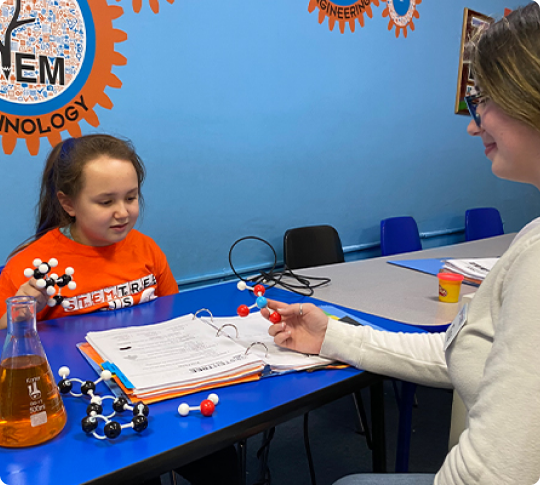
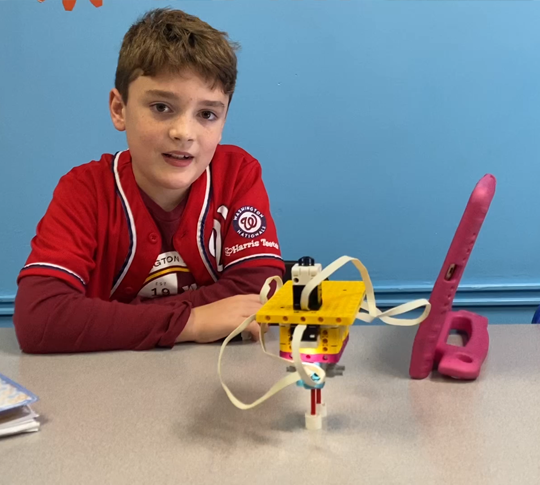
In the end, Stemtree of Spring TX embodies a philosophy that many families wish to see reflected in education everywhere: that curiosity is a powerful driver, and that the best way to cultivate it is through immersive, practical work. The center offers a compelling model for after-school STEM programs, one that respects a child’s pace, honors the value of careful practice, and builds a community where after school program spring tx making and learning go hand in hand. It is a place where the simple act of picking up a screwdriver or typing the first lines of code is not a distraction from learning but a direct path toward deeper understanding, stronger skills, and a more confident, capable learner who understands that science, technology, engineering, and math are not subjects to be memorized but tools to be used in the service of creative problem solving.